ScienceDaily (July 19, 2011) — Some of the most aggressive forms of breast cancer are more vulnerable to chemotherapy when it is combined with a new class of anti-cancer agent, researchers from the Walter and Eliza Hall Institute have shown.
ABT-737 is one of a new class of anti-cancer agents called BH3 mimetics that target and neutralise the so-called Bcl-2 proteins in cancer cells. Bcl-2 proteins act to 'protect' the cells after they have been damaged by chemotherapy drugs, and prevent the cancer cells from dying.
Professors Geoff Lindeman and Jane Visvader, who led the research with colleagues Dr Samantha Oakes and Dr François Vaillant from the institute's Stem Cells and Cancer division, said that the BH3 mimetics showed promise for treating breast cancers, including 'triple negative' cancers. Their research is published in the Proceedings of the National Academy of Sciences.
Triple negative breast cancers are so-called because they test negative for oestrogen, progesterone and HER2 receptors, and cannot be treated with hormone therapy or trastuzumab. They account for up to 20 per cent of all breast cancers and are typically aggressive with a poor prognosis.
Dr Lindeman said that early results suggest navitoclax (an orally-available BH3 mimetic) could provide new hope for treating some breast cancers that are not candidates for other currently available treatments.
"ABT-737 targets proteins from the Bcl-2 family, which are found at high levels in up to 70 per cent of breast cancers," Dr Lindeman said. "We have shown that breast tumours that have high levels of Bcl-2 respond well to treatment with ABT-737 when used in combination with a conventional chemotherapy drug."
ABT-737 and navitoclax were discovered by Abbott scientists and are based on the discovery made at the Walter and Eliza Hall Institute in the 1980s that Bcl-2 is a 'pro-survival' protein responsible for preventing cell death in healthy and diseased cells. ABT-737 and navitoclax are not yet available for patient treatment, but navitoclax is currently in phase II clinical trials to establish its efficacy in treating some types of leukemia and lymphoma. Navitoclax is being jointly developed by Abbott and Genentech, Inc.
Dr Visvader said combined treatment with ABT-737 and docetaxel (a commonly used chemotherapy drug for treating breast cancer) in mice transplanted with human breast cancer cells improved tumour response and survival rates, when compared to docetaxel as a single agent. ABT-737 alone was not effective in treating cancers with high levels of Bcl-2, nor was it effective in treating cancers that did not express Bcl-2.
"The research suggests that these agents make the cancer cells more vulnerable to chemotherapy," Dr Visvader said. "We are particularly excited that the research shows a good response in Bcl-2-expressing breast cancer, including basal-like breast cancer, which is often the most aggressive and hardest to treat."
Dr Lindeman said the research could lead to the development of new treatment regimens that make resistant and difficult-to-treat breast cancers more vulnerable to conventional chemotherapy treatments. "We have had a good result in pre-clinical models of disease, but we are still a way off this being used in humans," Dr Lindeman, who is also an oncologist at The Royal Melbourne Hospital, said. "We hope that these results could see a clinical trial of navitoclax for treating breast cancer with high Bcl-2 levels within the next few years."
The project was supported by the Victorian Breast Cancer Research Consortium through the Victorian Cancer Agency, the National Health and Medical Research Council, Australian Cancer Research Foundation and the National Breast Cancer Foundation. Breast cancer samples were provided with the support of the Victorian Cancer Biobank.
Source : ScienceDaily
Tampilkan postingan dengan label Breast Cancer Daily News. Tampilkan semua postingan
Tampilkan postingan dengan label Breast Cancer Daily News. Tampilkan semua postingan

Annual Breast Cancer Screening Beginning at Age 40 Reduces Mastectomy Risk, Study Finds
ScienceDaily Report

(Dec. 1, 2010) — Having a yearly mammogram greatly reduces the risk of mastectomy following breast cancer in women between the ages of 40 and 50, according to a study presented today at the annual meeting of the Radiological Society of North America (RSNA).
"The results of this study support the importance of regular screening in the 40 to 50 age group," said lead author Nicholas M. Perry, M.B.B.S., F.R.C.S., F.R.C.R., director of The London Breast Institute at The Princess Grace Hospital in London. "Women in this age group who had undergone mammography the previous year had a mastectomy rate of less than half that of the others."
An estimated 207,090 new cases of invasive breast cancer will be diagnosed in American women in 2010. Currently, the American Cancer Society recommends annual mammography screening for women beginning at age 40 in the U.S., but last year, the U.S. Preventive Services Task Force recommended changing the guidelines to begin screening biennially (every other year) at age 50. There are no routine screening guidelines for women under 50 in the U.K.
The researchers studied the benefits of screening women between the ages of 40 and 50, the frequency of mammography and the type of treatment after breast cancer diagnosis.
Dr. Perry and colleagues reviewed the clinical data available on women from 40 to 50 that had been diagnosed with breast cancer and treated at The London Breast Institute. Between 2003 and 2009, 971 women had been diagnosed with breast cancer. At the time of diagnosis, 393 (40 percent) of the women were under 50, with 156 of these women completing treatment at the center. Of the treated women, 114 (73 percent) had no prior mammograms. Forty-two women had been previously screened with mammography, of whom 29 had at least one mammogram within the previous two years. Of those, 16 women had a mammogram one year prior.
"We reviewed the records of the women needing mastectomy to determine whether or not they had undergone mammography the previous year," Dr. Perry said. "We were surprised at the degree of benefit obtained from yearly screening in this age group."
Data showed that mastectomy was the required treatment for 3 (19 percent) of the 16 women who had been screened the prior year, compared to 64 (46 percent) of the 140 women who had not been screened in the past year.
"Regular screening is already proven to lower the chance of women dying from breast cancer," Dr. Perry said. "The results of our study support the importance of regular screening in the under-50 age group and confirm that annual mammography improves the chances of breast conservation should breast cancer develop."
Dr. Perry's coauthors are Sue Milner, B.Sc., D.C.R., Kefah Mokbel, M.B.B.S., M.S., F.R.C.S., Stephen W. Duffy, B.Sc., M.Sc., and Katja Pinker, M.D.
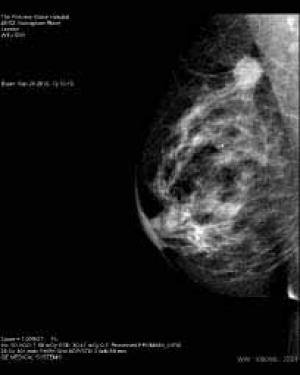
(Dec. 1, 2010) — Having a yearly mammogram greatly reduces the risk of mastectomy following breast cancer in women between the ages of 40 and 50, according to a study presented today at the annual meeting of the Radiological Society of North America (RSNA).
"The results of this study support the importance of regular screening in the 40 to 50 age group," said lead author Nicholas M. Perry, M.B.B.S., F.R.C.S., F.R.C.R., director of The London Breast Institute at The Princess Grace Hospital in London. "Women in this age group who had undergone mammography the previous year had a mastectomy rate of less than half that of the others."
An estimated 207,090 new cases of invasive breast cancer will be diagnosed in American women in 2010. Currently, the American Cancer Society recommends annual mammography screening for women beginning at age 40 in the U.S., but last year, the U.S. Preventive Services Task Force recommended changing the guidelines to begin screening biennially (every other year) at age 50. There are no routine screening guidelines for women under 50 in the U.K.
The researchers studied the benefits of screening women between the ages of 40 and 50, the frequency of mammography and the type of treatment after breast cancer diagnosis.
Dr. Perry and colleagues reviewed the clinical data available on women from 40 to 50 that had been diagnosed with breast cancer and treated at The London Breast Institute. Between 2003 and 2009, 971 women had been diagnosed with breast cancer. At the time of diagnosis, 393 (40 percent) of the women were under 50, with 156 of these women completing treatment at the center. Of the treated women, 114 (73 percent) had no prior mammograms. Forty-two women had been previously screened with mammography, of whom 29 had at least one mammogram within the previous two years. Of those, 16 women had a mammogram one year prior.
"We reviewed the records of the women needing mastectomy to determine whether or not they had undergone mammography the previous year," Dr. Perry said. "We were surprised at the degree of benefit obtained from yearly screening in this age group."
Data showed that mastectomy was the required treatment for 3 (19 percent) of the 16 women who had been screened the prior year, compared to 64 (46 percent) of the 140 women who had not been screened in the past year.
"Regular screening is already proven to lower the chance of women dying from breast cancer," Dr. Perry said. "The results of our study support the importance of regular screening in the under-50 age group and confirm that annual mammography improves the chances of breast conservation should breast cancer develop."
Dr. Perry's coauthors are Sue Milner, B.Sc., D.C.R., Kefah Mokbel, M.B.B.S., M.S., F.R.C.S., Stephen W. Duffy, B.Sc., M.Sc., and Katja Pinker, M.D.
Women With False-positive Mammograms Report High Anxiety And Reduced Quality Of Life
Doctors are calling for women to receive more information about the pitfalls of breast cancer screening, as well as the benefits, after some women who received false-positive results faced serious anxiety and reduced quality of life for at least a year.
A study published online by BJS, the British Journal of Surgery, shows that patients with false-positive results - where the mammogram is abnormal but no cancer is present - had to undergo more diagnostic procedures than women with breast cancer before they were given the all clear. Researchers from The Netherlands spoke to 385 women with abnormal mammogram results - 152 were subsequently diagnosed with breast cancer, but the other 233 had false-positive results and did not have cancer.
"Common sense tells us that early detection of breast cancer is good and most screening programmes have been successful in reducing breast cancer deaths" says lead author Dr Lideke van der Steeg from the Department of Surgery, St Elisabeth Hospital, Tilburg, and the Centre of Research and Psychology in Somatic Diseases, Tilburg University.
"However, while some women truly benefit from early detection, others experience harm and unnecessary anxiety. The women who received false-positives in our study experienced a significant reduction in their quality of life, especially if they were prone to anxiety, and the effects of this lasted at least a year.
"In fact, women who had a tendency to be anxious fared much worse if they received a false-positive - which is estimated to happen in 60 per cent of abnormal mammograms - than if they were actually diagnosed with breast cancer."
Women with abnormal mammograms attending three hospitals over a five-year period were invited to participate. Their quality of life (QoL) was assessed using the World Health Organization's Quality of Life instrument 100, which assesses QoL in six domains physical health, psychological health, level of independence, social relationships, environment and spirituality.
Clinical data were obtained from the women's medical records and they were also asked to complete questionnaires providing demographic information such as age, marital status, education and socioeconomic status.
Women in the breast cancer (BC) group were significantly older than the women in the false-positive (FP) group 60.2 years versus 57.3 years. They also had larger tumours than the FP group 17.4mm versus 9.9mm.
The key factors influencing QoL scores differed between the two groups:
-- Trait anxiety (a tendency to experience anxiety) accounted for up to 55 per cent of the variance in the QoL score in the FP group. It reached this peak at three months, but was similar at months one and 12 (43 per cent and 40 per cent respectively).
-- State anxiety (temporary anxiety due to a specific situation) accounted for up to 46 per cent of the variance in the BC group. It peaked at six months, but was similar in months one and 12 (32 per cent and 34 per cent).
-- State anxiety levels did not significantly influence QoL in the FP group and trait anxiety levels did not influence QoL in the BC group.
Significantly more diagnostic procedures, including biopsies, were needed in the FP group to reach a final diagnosis. Only 14 per cent of the BC group required four procedures - the other 86 per cent required three - while 32 per cent of the FP group required more than three. Fifty-five per cent of the FP group returned to the outpatient clinic in the first year, some as many as eight times.
The authors believe that the anxiety and lower QoL experienced by women in the FP group were soley due to the recall after screening and the subsequent diagnostic procedures.
"The decision to participate in a screening programme requires balanced information about the potential benefits and dangers" says Dr van der Steeg.
"Women often overestimate their risk of breast cancer and the material provided by healthcare professionals and government agencies often focus on the positive aspects of screening and are not always objective.
"Women deserve more balanced information to help them to chose whether or not to accept a breast screening invitation. This should not only cover the supposed benefits, but explain the potential side-effects of a false-positive, such as the increased feelings of anxiety and reduced QoL found by our study."
Sources: Wiley - Blackwell, AlphaGalileo Foundation.
A study published online by BJS, the British Journal of Surgery, shows that patients with false-positive results - where the mammogram is abnormal but no cancer is present - had to undergo more diagnostic procedures than women with breast cancer before they were given the all clear. Researchers from The Netherlands spoke to 385 women with abnormal mammogram results - 152 were subsequently diagnosed with breast cancer, but the other 233 had false-positive results and did not have cancer.
"Common sense tells us that early detection of breast cancer is good and most screening programmes have been successful in reducing breast cancer deaths" says lead author Dr Lideke van der Steeg from the Department of Surgery, St Elisabeth Hospital, Tilburg, and the Centre of Research and Psychology in Somatic Diseases, Tilburg University.
"However, while some women truly benefit from early detection, others experience harm and unnecessary anxiety. The women who received false-positives in our study experienced a significant reduction in their quality of life, especially if they were prone to anxiety, and the effects of this lasted at least a year.
"In fact, women who had a tendency to be anxious fared much worse if they received a false-positive - which is estimated to happen in 60 per cent of abnormal mammograms - than if they were actually diagnosed with breast cancer."
Women with abnormal mammograms attending three hospitals over a five-year period were invited to participate. Their quality of life (QoL) was assessed using the World Health Organization's Quality of Life instrument 100, which assesses QoL in six domains physical health, psychological health, level of independence, social relationships, environment and spirituality.
Clinical data were obtained from the women's medical records and they were also asked to complete questionnaires providing demographic information such as age, marital status, education and socioeconomic status.
Women in the breast cancer (BC) group were significantly older than the women in the false-positive (FP) group 60.2 years versus 57.3 years. They also had larger tumours than the FP group 17.4mm versus 9.9mm.
The key factors influencing QoL scores differed between the two groups:
-- Trait anxiety (a tendency to experience anxiety) accounted for up to 55 per cent of the variance in the QoL score in the FP group. It reached this peak at three months, but was similar at months one and 12 (43 per cent and 40 per cent respectively).
-- State anxiety (temporary anxiety due to a specific situation) accounted for up to 46 per cent of the variance in the BC group. It peaked at six months, but was similar in months one and 12 (32 per cent and 34 per cent).
-- State anxiety levels did not significantly influence QoL in the FP group and trait anxiety levels did not influence QoL in the BC group.
Significantly more diagnostic procedures, including biopsies, were needed in the FP group to reach a final diagnosis. Only 14 per cent of the BC group required four procedures - the other 86 per cent required three - while 32 per cent of the FP group required more than three. Fifty-five per cent of the FP group returned to the outpatient clinic in the first year, some as many as eight times.
The authors believe that the anxiety and lower QoL experienced by women in the FP group were soley due to the recall after screening and the subsequent diagnostic procedures.
"The decision to participate in a screening programme requires balanced information about the potential benefits and dangers" says Dr van der Steeg.
"Women often overestimate their risk of breast cancer and the material provided by healthcare professionals and government agencies often focus on the positive aspects of screening and are not always objective.
"Women deserve more balanced information to help them to chose whether or not to accept a breast screening invitation. This should not only cover the supposed benefits, but explain the potential side-effects of a false-positive, such as the increased feelings of anxiety and reduced QoL found by our study."
Sources: Wiley - Blackwell, AlphaGalileo Foundation.
Langganan:
Postingan (Atom)


 Postingan

